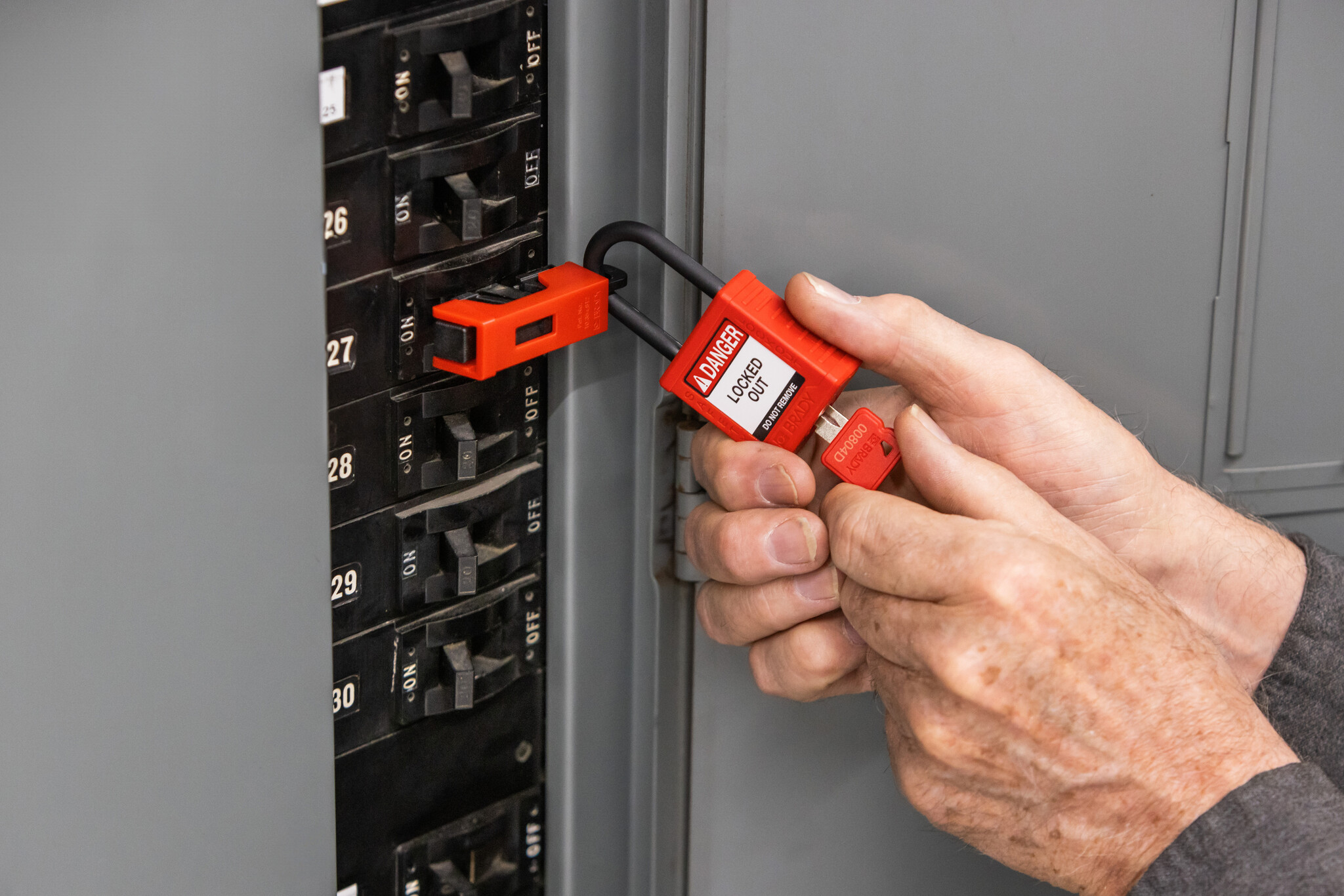
Every year, preventable electrical accidents occur during equipment maintenance—not because of complex failures, but because of skipped safety steps. One of the most effective ways to stop accidental energization is through lockout tagout (LOTO) breaker locks. These small but critical devices physically block circuit breakers from being turned on, ensuring no one can restart machinery while work is underway.
For maintenance crews, electricians, and safety managers, LOTO breaker locks aren’t just tools—they’re safeguards built into a broader energy control protocol. When used correctly, they reduce risk, support regulatory compliance, and create a culture of accountability.
This guide dives into how breaker locks work, where they’re used, common mistakes, and the best options available to keep your team protected.
Why Lockout Tagout Breaker Locks Matter
Electricity doesn’t forgive lapses. A momentary oversight—like failing to isolate a circuit—can lead to arc flashes, electrocution, or equipment damage. According to OSHA, compliance with LOTO procedures prevents an estimated 120 fatalities and 50,000 injuries annually in the U.S.
Breaker locks are central to this system because they secure the point where power enters equipment. Unlike tags, which are warnings, locks are physical barriers. A breaker lock ensures that even if someone tries to flip the switch, the breaker stays in the “off” position.
Real-world scenario: An HVAC technician servicing a rooftop unit locks out the 480V disconnect with a breaker lock. A janitor later enters the mechanical room and sees the locked breaker. The tag explains the work in progress. The lock prevents accidental re-energizing. The technician finishes safely.
Without the lock, the risk of injury skyrockets.
How Lockout Tagout Breaker Locks Work
Breaker locks are designed to fit over the toggle or handle of a circuit breaker, preventing it from being moved. Most models are made from durable, non-conductive materials like nylon or polycarbonate to resist heat, impact, and electrical conductivity.
The process follows a standard LOTO sequence:
- Identify energy sources – Locate all breakers supplying power to the equipment.
- Shut down equipment – Turn off the machine using normal controls.
- Isolate energy – Switch the breaker to the “off” position.
- Apply lock and tag – Attach a lockout device and tag with worker name, date, and reason.
- Verify de-energization – Test for zero energy using a voltage tester.
- Perform maintenance – Complete the required work.
- Remove lockout – Only the person who applied the lock may remove it.
Breaker locks vary in design depending on the type of breaker. Some clamp over the handle, others slide into place or use adjustable straps. The key is compatibility—using the right lock for your specific breaker model.
Common Types of Breaker Locks
Not all breaker locks are created equal. The right choice depends on your electrical setup, environment, and workflow.
1. Toggle Locks (Clip-On Style)
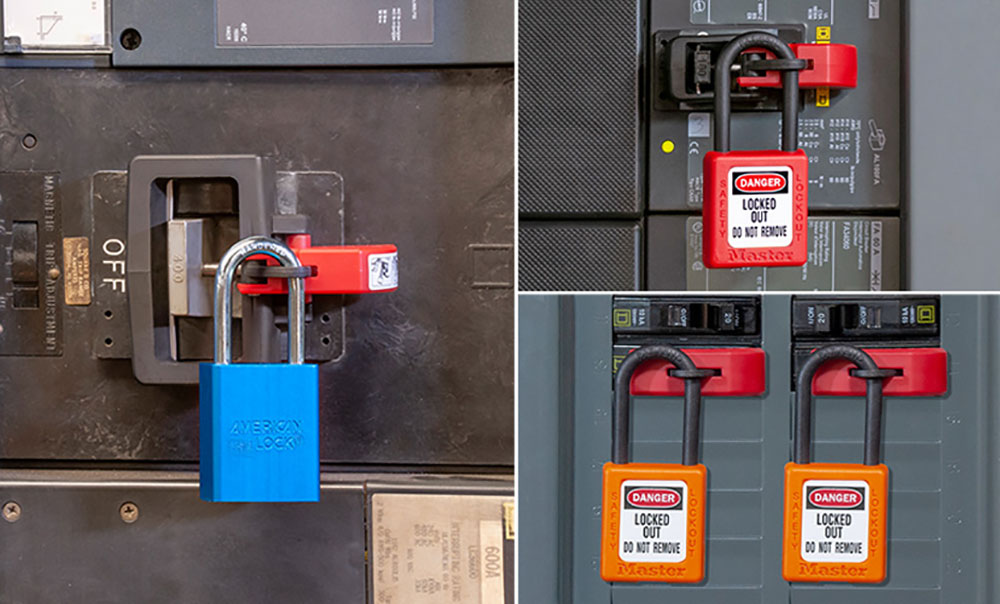
These snap over standard 1-inch breakers and are ideal for panelboards and distribution panels. They're quick to install and widely used in industrial settings.
- Best for: Standard molded-case circuit breakers
- Limitation: May not fit oversized or specialty breakers
2. Breaker Lockout Hasps Used when multiple workers need to lock the same breaker. A hasp allows several padlocks to be attached, enforcing group lockout procedures.
- Example: Three electricians working on a motor control center each apply their personal lock to the hasp.
- Critical rule: Work doesn’t resume until all locks are removed.
3. Universal Strap Locks Adjustable nylon straps fit a wide range of breaker sizes and shapes. They’re flexible but require proper tensioning to prevent tampering.
- Pro tip: Use UV-resistant straps in outdoor panels to prevent degradation.
4. Mini Breaker Locks Designed for small, low-amperage breakers (e.g., 15–30A) in control panels or HVAC units. Compact size makes them easy to store and carry.
5. Molded Lockout Devices Custom-shaped to fit specific breaker models (e.g., Square D QO, Siemens, GE). These offer the most secure fit but are less flexible across brands.
Integration with Full LOTO Programs
Breaker locks are just one component of a comprehensive lockout tagout system. A complete program includes:
- Written energy control procedures
- Employee training and certification
- Periodic audits (at least annually)
- Proper lockout hardware (locks, tags, hasps, storage stations)
A common mistake? Using locks without training. A technician might apply a breaker lock but fail to verify de-energization. That creates a false sense of security.
Case in point: A maintenance team locked a breaker but didn’t check for stored energy in a capacitor bank. When they opened the panel, residual voltage caused an arc flash. The lock prevented re-energizing, but incomplete isolation still led to injury.
Lesson: Locks are only as strong as the process behind them.
Top 5 Lockout Tagout Breaker Locks in 2024
Choosing the right breaker lock depends on durability, fit, and ease of use. Here are five top-performing models trusted across industries:
| Product | Key Features | Best Use Case |
|---|---|---|
| Grace Industries GL-100 | Nylon construction, fits most 1” breakers, UV resistant | General industrial panels |
| 3M DBL-2 | Dual breaker lock, secures two adjacent breakers | Compact electrical cabinets |
| Safeguard Lockout SGL-900 | Adjustable strap design, fits odd-shaped breakers | Multi-vendor environments |
| Master Lock 4684DAT | Hasp-compatible, includes tag, weather-resistant | Outdoor or wet locations |
| Seton 2SWM5 | Molded for Square D QO breakers, high-impact plastic | Facilities using Square D panels |
Workflow tip: Label each lock with the user’s ID number or nameplate. This speeds up audits and ensures accountability.
Common Mistakes That Undermine Breaker Lock Effectiveness
Even with the best hardware, human error can compromise safety.
Mistake 1: Using Locks Without Tags A lock without a tag is suspicious but not informative. Tags tell others why the lock is there, who applied it, and when. OSHA requires both.

Mistake 2: Sharing Lock Keys "Emergency override" keys kept in supervisors’ desks violate LOTO principles. Only the authorized employee should remove their lock.
Mistake 3: Incomplete Isolation Some equipment has multiple power sources—line voltage, backup batteries, pneumatic lines. Breaker locks only address electrical input. Other energy sources need separate controls.
Mistake 4: Poor Fit A loose or ill-fitting lock can be pried off or bypassed. Always test the fit before relying on it.
Mistake 5: Skipping Verification Applying a lock is not the same as confirming zero energy. Always test with a calibrated meter.
Compliance: What OSHA and NFPA 70E Require
OSHA’s 29 CFR 1910.147 outlines the requirements for controlling hazardous energy. Key points:
- Each authorized employee must have their own lock and key.
- Locks must be standardized (e.g., same color, same shape).
- Tags must contain at least: employee name, department, and reason for lockout.
- Procedures must be documented and reviewed annually.
NFPA 70E adds electrical-specific guidance, including arc flash risk assessments and PPE requirements. It reinforces that lockout is not optional—it’s a hierarchy-of-controls imperative.
Failure to comply isn’t just a fine hazard (up to $15,625 per violation). It’s a liability risk. In litigation following an accident, investigators will ask: Was the breaker locked out? Was the procedure followed? Was training up to date?
Real-World Applications Across Industries
Manufacturing On a production line, a robotic arm requires motor replacement. The technician locks the main 480V breaker with a GL-100 toggle lock, tags it, and verifies zero energy. The line stays dead until repairs finish.
Healthcare Hospital maintenance crews use mini breaker locks on medical gas compressor panels. These systems can’t be shut down fully, but isolated circuits can be locked during servicing.
Commercial Facilities HVAC units on rooftops often have disconnects with breakers. A strap-style lock secures the breaker during coil cleaning or refrigerant work, preventing startup during high-heat conditions.
Data Centers Critical cooling systems need regular maintenance. Breaker locks on CRAC unit circuits ensure no accidental restart during filter changes—avoiding both safety risks and thermal shutdowns.
Choose Reliability, Not Just Price
It’s tempting to buy cheap breaker locks in bulk. But flimsy materials, poor fit, or brittle plastic in cold environments can lead to failure.
Invest in: - UV- and heat-resistant materials - Non-conductive construction - Brand-specific compatibility - Audit-ready labeling options
A $15 lock that fails is far more expensive than a $25 lock that works.
Final Thoughts: Make Breaker Locks Part of Your Safety DNA
Lockout tagout breaker locks are more than compliance tools—they’re symbols of a safety-first mindset. When every technician carries their lock, applies it correctly, and follows the full procedure, you build a culture where shortcuts aren’t tolerated.
Start by auditing your current LOTO program. Are your breaker locks the right type? Are they being used consistently? Are tags filled out completely?
Then, retrain. Refresh. Reinforce.
The next accident prevented won’t make headlines. But it will matter—to the worker going home safely, and to the team that did it right.
Frequently Asked Questions
What is the purpose of a lockout tagout breaker lock? It physically prevents a circuit breaker from being turned on, ensuring equipment remains de-energized during maintenance.
Can one lock be used for multiple breakers? No—each energy source must be individually isolated. Use multi-lock hasps for group work, but each worker applies their own lock.
Are breaker locks required by OSHA? Yes, OSHA requires physical lockout devices as part of its hazardous energy control standard (1910.147).
What materials are breaker locks made from? Most are made from non-conductive, durable plastics like nylon or polycarbonate to resist impact, heat, and electricity.
Can breaker locks be used outdoors? Yes, but only if they’re rated for UV and moisture resistance. Standard indoor locks may degrade in sunlight or wet conditions.
Do breaker locks work on all circuit breakers? No—designs vary by brand and model. Use universal strap locks for flexibility or molded versions for exact fits.
Who should remove a lockout breaker lock? Only the authorized employee who applied the lock should remove it, ensuring personal accountability.
FAQ
What should you look for in Lockout Tagout Breaker Locks: Safety Essentials for Energy Control? Focus on relevance, practical value, and how well the solution matches real user intent.
Is Lockout Tagout Breaker Locks: Safety Essentials for Energy Control suitable for beginners? That depends on the workflow, but a clear step-by-step approach usually makes it easier to start.
How do you compare options around Lockout Tagout Breaker Locks: Safety Essentials for Energy Control? Compare features, trust signals, limitations, pricing, and ease of implementation.
What mistakes should you avoid? Avoid generic choices, weak validation, and decisions based only on marketing claims.
What is the next best step? Shortlist the most relevant options, validate them quickly, and refine from real-world results.